
Every January, millions of people set ambitious fitness resolutions—only to watch motivation fade weeks later. The problem usually isn’t effort or intention. It’s how humans actually build habits.
Research on goal-setting and behavior change consistently shows that accountability is one of the strongest predictors of success. According to findings frequently cited from the American Society of Training and Development (ASTD), people are 65% more likely to reach a goal when they commit to it with another person, and that likelihood can rise dramatically—often cited as up to 95%—when regular accountability check-ins are involved.
That psychological truth explains why solo workouts fail so often—and why sports like tennis are uniquely effective for long-term fitness.
The Psychology of Habit Formation: Why Accountability Works
Human motivation isn’t designed to operate in isolation. Behavioral psychology shows that social commitment transforms intentions into action. When another person is involved—especially someone expecting you to show up—your brain treats the commitment as a social obligation, not a casual preference.
This phenomenon is sometimes referred to as the accountability effect, and it’s why structured, social activities outperform self-directed exercise programs in long-term adherence.
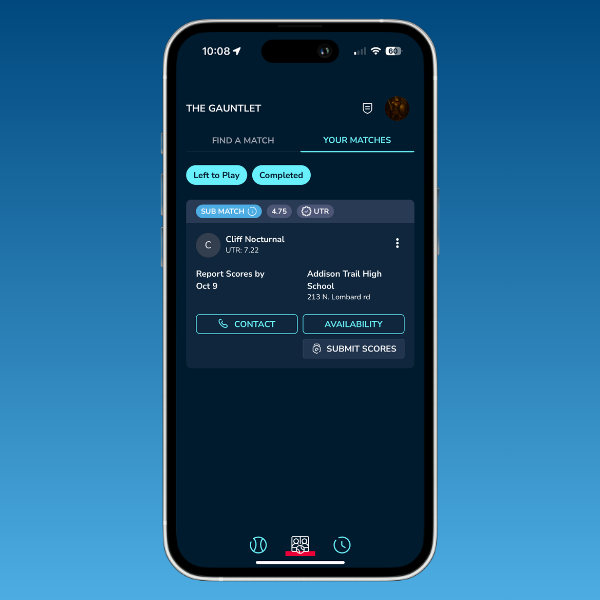
In Gladiator Tennis leagues, accountability isn’t forced—it’s built into the experience:
-
You commit to matches with real people
-
Your results are tracked
-
Your progress is visible over time
That structure matters. In fact, 91% of Gladiator Tennis players report that staying fit is their primary reason for playing, meaning you’re surrounded by people working toward the same goal—not just chasing wins.
Tennis Is One of the Healthiest Sports You Can Play
Tennis is often cited as one of the world’s healthiest sports because it combines cardiovascular exercise, strength, coordination, and cognitive engagement in a single activity.
1. Cardiovascular and Physical Health
Multiple peer-reviewed studies show that regular tennis participation improves:
-
Aerobic capacity
-
Cholesterol profiles
-
Bone density
-
Muscular strength and balance
A comprehensive review published in the British Journal of Sports Medicine found that racket sports (including tennis) were associated with significantly reduced all-cause mortality risk compared to sedentary activity.
2. Mental Health and Cognitive Benefits
Tennis also delivers meaningful psychological benefits. Research shows participation is linked to:
-
Reduced anxiety and depressive symptoms
-
Improved mood regulation
-
Increased self-confidence and resilience
A 2023 review in Sports (MDPI) highlights tennis as a sport that engages both executive function and emotional regulation, supporting long-term mental well-being.
3. Longevity and Social Health
Large population studies suggest that people who regularly play tennis may live years longer than inactive individuals—likely due to the combination of physical exertion and sustained social connection.
Why Tennis Works When Other Fitness Plans Fail
Most fitness resolutions collapse because workouts feel like work. Tennis doesn’t.
From a behavioral science perspective, tennis succeeds because it delivers three key habit-forming ingredients:
-
Enjoyment – play replaces obligation
-
Social reinforcement – people expect you to show up
-
Visible progress – improvement is tangible
These elements are consistently shown to improve habit adherence compared to solitary exercise routines.
Gladiator Tennis adds structure without rigidity, giving you a reason to stay committed while still fitting into real life.
A Smarter Way to Approach Your 2026 Fitness Goals
If you want 2026 to be different, don’t rely on motivation alone. Build systems that make consistency easier than quitting.
Tennis gives you:
-
Built-in accountability
-
Real social commitment
-
Measurable improvement
-
A workout that doesn’t feel like one
That’s why so many players describe Gladiator Tennis as the fitness routine they actually stick with.
Conclusion
The secret to achieving your fitness goals isn’t willpower; it’s choosing an activity you want to return to, with people who help you stay consistent.
Tennis delivers real health benefits, real psychological reinforcement, and real accountability. Gladiator Tennis simply makes it easier (and more fun!) to get on the court.
Gladiator Tennis: The fitness routine that doesn’t feel like one.
FAQ
FAQ: Tennis, Fitness Goals, and Accountability in 2026
1) Why do New Year’s fitness resolutions fail so often?
Most resolutions fail because they rely on motivation instead of systems. Habits stick better when the activity is enjoyable, social, and has accountability—so showing up becomes easier than quitting.
2) How does accountability improve fitness results?
Accountability increases follow-through by turning a personal goal into a social commitment. A widely cited ASTD/goal-setting statistic suggests people are more likely to meet goals when they commit to another person and when they have ongoing accountability check-ins. (See sources at the bottom of the blog.)
3) Is tennis actually a good workout for weight loss and cardio fitness?
Yes—tennis can be vigorous intermittent exercise (short bursts + recovery) that challenges both cardiovascular endurance and muscular stamina. Research on racket sports shows associations with improved health markers and lower all-cause mortality risk compared with inactivity.
4) What are the mental health benefits of playing tennis?
Studies and reviews link tennis participation with improvements in mood, stress management, resilience, and cognitive engagement—partly because it combines movement, skill-building, and social interaction.
5) How many times per week should I play tennis to improve fitness?
A practical target is 1–3 sessions per week depending on your baseline fitness and schedule. Consistency matters more than perfection—weekly play is often enough to build the habit and see improvements over time.
6) What makes tennis easier to stick with than gym workouts?
Tennis is inherently motivating because it’s a game: it’s social, varied, and progress is obvious (shots, match results, stamina, confidence). That combination tends to feel less like “exercise” and more like something you want to do.
7) Do I need to be “good” at tennis to get the fitness benefits?
No. Beginners still benefit from movement, heart-rate elevation, coordination, and mental engagement. Fitness gains come from showing up consistently—not from being advanced.
8) What is Gladiator Tennis and how does it support fitness goals?
Gladiator Tennis is a flexible league experience that adds structure and accountability while letting you schedule matches in real life. Many players join primarily to stay fit—91% of Gladiator Tennis players in our survey said fitness is their primary goal—so you’re surrounded by people with the same intention.
9) What’s the simplest way to start using tennis for my 2026 fitness plan?
Pick a consistent weekly window, commit to a match cadence you can sustain, and choose a format that makes showing up easy. If structure helps, joining a league can turn “I should work out” into “I’ve got a match.”
Sources
-
AFCPE – The Power of Accountability
https://www.afcpe.org/news-and-publications/the-standard/2018-3/the-power-of-accountability/ -
British Journal of Sports Medicine – Sports participation and mortality
https://pmc.ncbi.nlm.nih.gov/articles/PMC2465255/ -
The Mental Game of Tennis: A Scoping Review and the Introduction of the Resilience Racket Model
https://www.researchgate.net/publication/391070998_The_Mental_Game_of_Tennis_A_Scoping_Review_and_the_Introduction_of_the_Resilience_Racket_Model -
USTA – The Many Health Benefits of Tennis
https://www.usta.com/en/home/stay-current/eastern/the-many-health-benefits-of-tennis.html